Mongalia: A Handwritten Font That Elevates Small Business Branding
When you run a small business, every visual detail matters. Your logo, your product labels, your social media posts, and even your invoices all send a message about who you are and what you stand for. The font you choose can either reinforce that message or undermine it. Mongalia is a smooth, elegant, and flowing handwritten font that helps small business owners present their brand with warmth, consistency, and a professional touch. It brings a natural, human feel to your materials without sacrificing polish.
What Makes Mongalia Stand Out
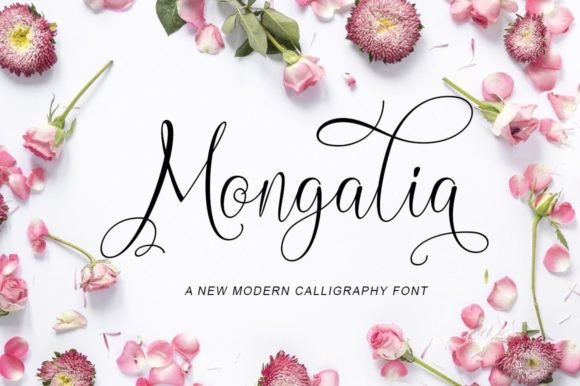
Mongalia has a beautifully balanced character with varied baselines and smooth lines. It does not look rigid or mechanical. Instead, it reads like natural handwriting, which makes it approachable and personal. The glyphs are carefully crafted, giving each letter a graceful flow. This is not a font that screams for attention. It invites people in. For a small business, that subtle invitation can be the difference between a customer glancing at your packaging and actually picking it up.
The style of Mongalia fits comfortably in the script font category, but it does not lean overly formal or decorative. It strikes a balance between elegance and readability. That balance is hard to find in many handwritten fonts. Some are too messy to read on a product label. Others are too stiff to feel authentic. Mongalia lands in a sweet spot where it feels both human and reliable.
Where Mongalia Fits in Your Brand Toolkit
One of the most practical questions a business owner faces is where to use a particular font. Mongalia works best as a display font. That means it shines in headlines, logos, product names, and accent pieces. It is not designed for long paragraphs of body text, and it should not carry the weight of an entire website or brochure on its own. Instead, use it where you want to create a focal point or add personality.
For a bakery brand, Mongalia could be the font used for the shop name on a storefront sign, the wordmark on a cake box, or the header on a menu. For a handmade candle business, it might appear on the label as the brand name or the scent name, while the ingredient list and safety information use a cleaner, more neutral typeface. For a beauty product packaging line, Mongalia can add a soft, feminine touch without feeling overly frilly. For a coaching or wellness business, it can communicate warmth and approachability on a website banner or a welcome guide.
Mongalia also works beautifully in digital spaces. Use it on Instagram posts to highlight a quote or a product name. On Pinterest graphics, it can anchor a pin title and draw the eye. On website banners, it can replace a generic heading font and make your brand feel more distinct. The key is to use it deliberately and sparingly, so each appearance carries impact.
Building a Consistent Brand Identity
Consistency is one of the hardest things for a small business to achieve, especially when you are designing your own materials. Using a font like Mongalia across multiple touchpoints helps create a visual thread that ties everything together. When a customer sees your logo on a business card, then spots the same handwritten feel on a thank-you card, and later recognizes it on a packaging insert, they start to associate that look with your business. That recognition builds trust over time.
Mongalia is versatile enough to work across printed and digital formats. On a product label, the smooth lines remain clear even at small sizes, provided you give the font enough breathing room. On a mobile screen, the varied baselines keep the text from looking flat or boring. On a printed menu, it adds a handcrafted feel that matches the experience of a cozy café or a boutique shop. Testing a font across these different formats before committing is always smart, but Mongalia holds up well in both physical and digital environments.
Pairing Mongalia with Other Fonts
Because Mongalia is a decorative script font, it pairs best with clean, simple typefaces. A neutral sans serif font like a minimalist geometric or a straightforward humanist sans serif gives Mongalia room to stand out without visual clutter. A subtle serif font can also work, especially if you want a slightly more traditional or refined look. The goal is to let Mongalia be the personality piece while the supporting font provides structure and readability.
For example, on a product label, you could use Mongalia for the product name and a light sans serif for the description and ingredients. On a website, Mongalia could appear in the hero heading while the body copy uses a standard web-safe serif or sans serif. On social media graphics, Mongalia can handle the main message, and a smaller sans serif can carry the call-to-action or secondary details. This kind of font pairing gives your brand a layered, intentional look without overcomplicating the design.
Practical Considerations Before You Commit
Before you roll Mongalia out across your entire brand, take time to test it in real scenarios. Print a sample label and see how it reads at the size you need. Put it on a mockup of your packaging. View it on a phone screen and a desktop monitor. Check how it looks on a social media thumbnail where space is tight. These small tests can save you from investing time and money into a look that does not translate well in practice.
Mongalia is a premium font with a refined feel, but like any display font, it requires good spacing and sizing decisions. Avoid crowding it with other decorative elements. Give it white space. Let the letters breathe. The smooth lines and graceful glyphs are meant to be seen clearly, not buried under too many competing design elements.
Understanding Commercial Licensing
If you plan to use Mongalia on products you sell, packaging you distribute, templates you offer, or any client-facing materials, you need to check the commercial font licensing details. Many fonts from Script Amp and other font foundries have specific terms for commercial use. Some licenses cover standard branding and printed materials. Others require an extended license if you plan to use the font on merchandise, digital products, or items sold in large quantities.
It is your responsibility as a business owner to read the licensing agreement carefully. Using a font without the proper license can lead to legal issues down the road, and it also undermines the value of the work that type designers put into creating high-quality fonts. Treating font licensing as a standard part of your business expenses is a smart practice. It protects you and supports the designers who make tools like Mongalia available.
Making Mongalia Work for Your Specific Business
Imagine you run a small café. Your menu, your takeaway cups, your loyalty cards, and your window signage all contribute to the customer experience. Using Mongalia on the menu headers and the café name gives the place a handcrafted, welcoming personality. Pair it with a simple sans serif for the food descriptions, and you have a clear hierarchy that is easy to read at a glance. Customers will associate that warm, handwritten feel with the quality of your coffee and the care you put into their visit.
Now imagine you sell handmade soaps online. Your product labels are small, but they are the first thing a customer sees when they open a package. Mongalia on the scent name or brand name adds a personal touch that factory-made labels cannot replicate. Combined with a clean font for the ingredient list, your packaging feels both artisanal and professional. That combination can encourage repeat purchases and word-of-mouth recommendations.
For a service-based business like a wedding photographer or a life coach, Mongalia can appear on welcome packets, email headers, and social media templates. It softens the brand and makes the business feel more approachable. Clients who sense that personal warmth are more likely to trust you with their important moments or personal growth.
A Font That Works as Hard as You Do
Mongalia is not just another decorative font. It is a tool that can help your small business look more consistent, professional, and recognizable across the many materials you create every day. Its smooth lines and balanced character make it easy to work with, whether you are designing a logo, a product label, a menu, a website banner, or a social media graphic. By pairing it with a clean supporting typeface and using it thoughtfully in key places, you can build a brand identity that feels cohesive without being boring.
The right font does not guarantee success, but it does remove one more barrier between your business and the people you want to reach. Mongalia helps you communicate your brand personality clearly and beautifully, whether your customer encounters it on a printed package or a mobile screen. Test it, pair it, license it properly, and let it become a reliable part of your design toolkit.