Baby Hoky Font: A Playful Script for Handmade Labels
I was sitting at my desk last week, tweaking the label design for a new soy candle I’d just poured. The scent was warm vanilla bean with a hint of coconut, and I wanted the label to feel just as cozy—like something you’d find at a little boutique or a weekend craft fair. I had the jar, the wax, the wick, and even a kraft paper tag ready. But the typeface? It was all wrong. Too stiff, too corporate, too much like a spreadsheet. Then I opened Baby Hoky, and everything clicked.
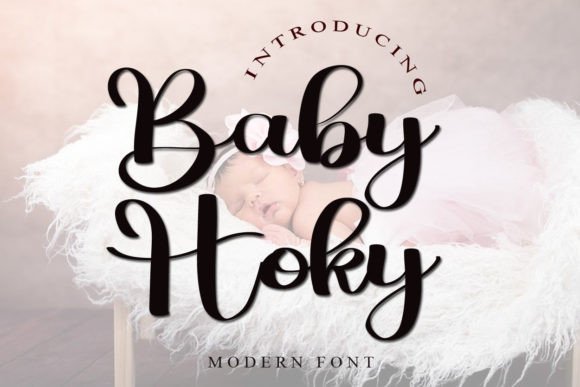
Baby Hoky is a fresh and relaxed script font that brings an instant handmade feel to any project. Its letters have a natural, bouncy rhythm—loops that swoop without being fussy, and a casual elegance that never feels overdone. When I typed “Vanilla Bean” in Baby Hoky, the label suddenly looked like it belonged on a shelf next to artisanal honey and hand-poured candles. That’s the kind of transformation a well-chosen script font can deliver.
When a Candle Label Needs a Personal Touch
That candle label became my first real test for Baby Hoky, and it passed beautifully. The font’s irregular baseline and slightly varied stroke weights mimic real handwriting, which is exactly what you want when you’re selling something made by hand. On a small 2x3 inch label, the letters stayed legible without feeling cramped. The swashes and alternates—yes, this font comes with extras—let me customize the look so every candle felt a little different.
For anyone making handmade products, that personal touch is gold. Whether you’re labeling soaps, lotions, or treat jars, Baby Hoky adds a layer of warmth that a standard sans serif just can’t match. I’ve since used it on soap wraps, lip balm tubes, and even the little thank-you cards I tuck into every order. The response? Customers often mention the packaging in reviews, calling it “adorable” and “special.” That’s the power of a thoughtful typeface.
From Invitations to Wall Art: Where Baby Hoky Shines
One of the things I love most about Baby Hoky is its range. It’s not a one-project wonder. I’ve seen it used on wedding invitation suites—place cards, welcome signs, and even the envelope addressing—and it never feels too casual or too formal. It finds that sweet spot where a handwritten look feels intentional, not sloppy.
I also printed a few quotation art pieces with it. A simple “This is the day” in Baby Hoky, framed in a thrifted gold frame, sold within a week at a local market. The font’s relaxed flow made the quote feel like a morning affirmation written by a friend. For digital printables—planner pages, sticker sheets, and journal cards—it works beautifully as a header or a decorative accent. The letters are open enough to layer behind a smaller sans serif for dates or details, but they also hold their own as the star of the design.
Wedding stationery is another natural home for Baby Hoky. When I designed a set of rustic barn-inspired invites, I used Baby Hoky for the couple’s names and then paired it with a simple serif for the body text. The contrast made the names pop without fighting the other elements. The bride later told me that the invitations “felt like them”—a reminder that the right font can capture a mood or a personality better than any decorative element.
Making the Most of Baby Hoky in Your Shop
If you’re selling on Etsy or at craft fairs, Baby Hoky can become a consistent thread in your brand identity. Use it on your logo, your shop banner, your thank-you cards, and your packaging. Repetition builds recognition. When a customer sees that same script on a product tag and then again on the instruction card inside, they start to associate the look with quality and care.
I’ve used Baby Hoky on tote bags (heat-transfer vinyl, test-cut first on scrap), mugs (sublimation, and it came out crisp), and even a small wooden sign for a friend’s front porch. For cutting machines like Cricut and Silhouette, the font’s strokes are generally clean and connected, but I always recommend doing a test cut at a smaller size to make sure the thin loops survive. On a mug or shirt, a short phrase works best—“Hello,” “Joy,” or a single name—because the script’s charm really shines in display settings. Longer sentences can work, but you’ll want to adjust spacing and check readability.
Readability and Production Tips for Handmade Items
Let’s talk about readability, because that’s where many script fonts fall apart for makers. Baby Hoky strikes a nice balance. The letterforms are open enough to read quickly, even on a small sticker or a tiny jewelry tag. For product labels that are 1.5 inches wide, I keep the phrase under 10 characters and bump up the size. On a larger label, like a candle jar or a soap wrapper, you can use it for the main name and then switch to a clean sans serif for scent notes or ingredients.
When preparing files for print or cut, always check that you’ve enabled stylistic alternates and ligatures if your software supports them. Some versions of Baby Hoky include swashes that can be activated for an extra flourish on capital letters. Those swashes can look gorgeous on a wedding invitation header, but on a tiny sticker, they might get lost or cause weeding headaches. Test, test, test. I keep a running test sheet of each new font at various sizes—small, medium, large—so I can see exactly how it behaves before committing to a batch of 50 labels.
Pairing Baby Hoky with Other Fonts
Baby Hoky plays well with others. Its relaxed script style pairs naturally with a clean sans serif like Montserrat or Lato for body text or small print. I also like it next to a simple serif like Playfair Display for a more elegant, editorial look. The contrast between the flowing script and the structured serif creates a visual hierarchy that’s easy on the eyes.
If you’re going for a more playful or layered aesthetic, you can even pair Baby Hoky with a second script or a handwritten font, as long as they’re different in weight or spacing. Just be careful not to let them compete. I usually reserve Baby Hoky for the main headline or the most important word, and let everything else take a supporting role.
What to Check Before You Start Selling
Before you start slapping Baby Hoky on every product in your shop, take a minute to review the licensing. The font is categorized under Script Amp and Fonts, so you’ll want to confirm whether your intended use—physical products, digital templates, printables, or commercial merchandise—is covered by the standard license. Many script fonts require an extended license for items like mugs or T‑shirts sold in volume, or for digital products that include the font files themselves.
Also check what file formats are included. Most fonts come as OTF or TTF, and both work fine for cutting machines and design software. If you need multilingual support—accented characters, special glyphs—confirm that the font covers your language. Some scripts only include basic Latin. Baby Hoky, in my experience, handles the usual Western European characters, which covers most of my customers.
Finally, don’t forget to explore the stylistic sets and alternates. Those extra letterforms are what make a script font feel custom and unique. On my butane candle labels, I chose a double‑loop version of the capital “V” that made the word “Vanilla” feel even more special. Small touches like that cost nothing extra but add real perceived value. When a customer picks up a product and sees that careful detail, they notice. And they remember.
However you choose to use Baby Hoky—whether on a wedding welcome board, a batch of Christmas tags, or a simple chalk-style sign for your booth—it brings that warm, handmade quality that today’s shoppers are looking for. It’s a font that feels like it was written just for them. And in a world of mass production, that feeling is everything.